Charging at a petrol station or highway rest stop in Thailand is not much harder than filling up with fuel. The differences: everything happens in a phone app, nobody does it for you, and you wait about half an hour rather than a few minutes. Sort out the app and payment before you leave and your first charging stop will go smoothly.
Before you set off: install one or two apps
Thai charging networks are separate, and most chargers can only be started from that network's own app. Install at least two, register and add a payment method before your trip.
| App | Network / operator | Payment (per the operator) |
|---|---|---|
| EV Station PluZ | PTT (OR) — most chargers are at PTT Station petrol stations | Credit or debit card linked in the app |
| PEA VOLTA | Provincial Electricity Authority — at petrol stations and PEA offices, strong upcountry | Top up by Thai QR code or credit/debit card |
| EleXA | EGAT (EleX by EGAT stations) — also finds other networks' chargers | Credit card, mobile banking, PromptPay and Max Me wallet |
| EA Anywhere | Energy Mahanakorn | Find, reserve, charge and pay in the app |
Foreign cards usually work for card-linked apps; if an app only accepts Thai mobile banking, use another network or ask our staff at hand-over. PlugShare is handy for finding chargers across all networks.
Know your plugs: CCS2 and Type 2
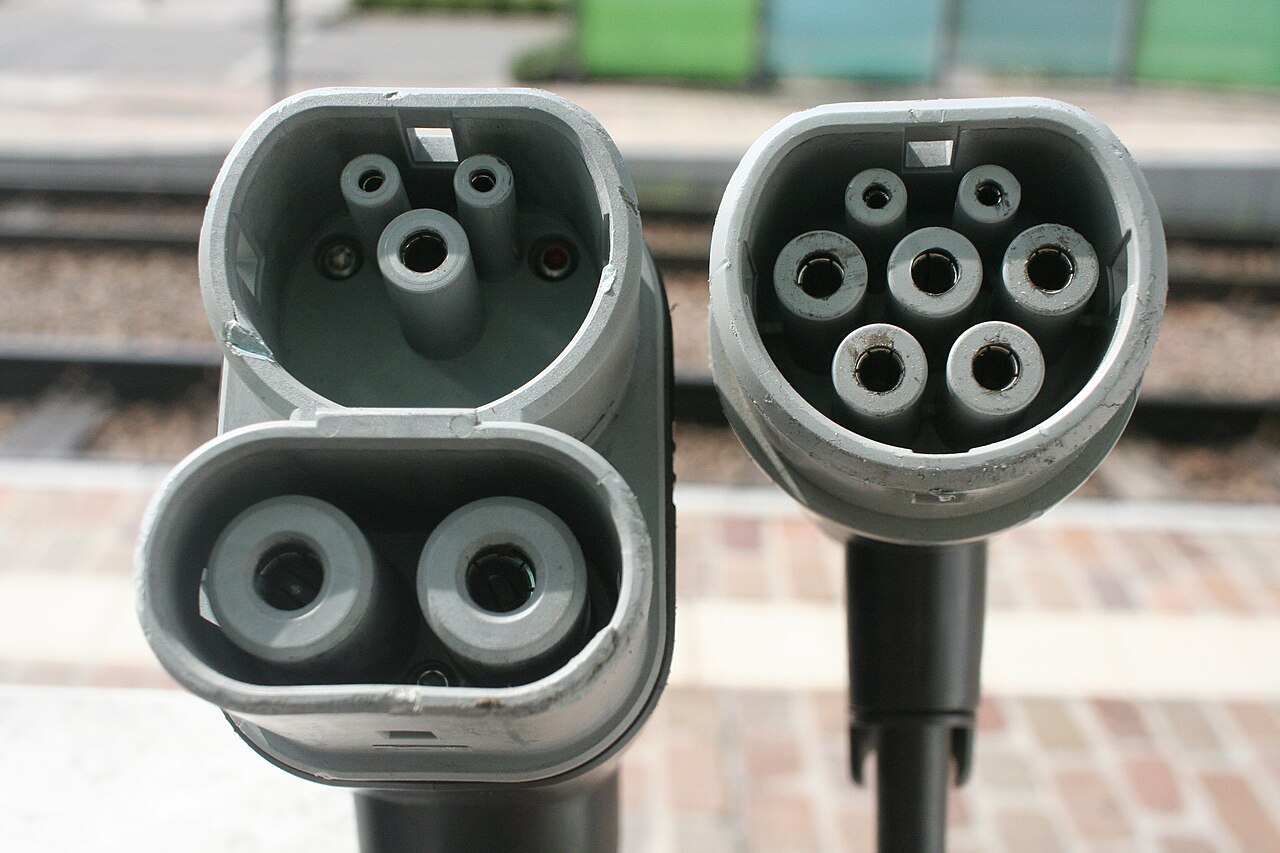
Most EVs sold in Thailand use two connectors. CCS2 is the DC fast-charging plug — it looks like a Type 2 plug with two large extra pins underneath. Type 2 is the normal AC plug found at malls, hotels and condos. Some PEA VOLTA sites still have CHAdeMO for a few older models. When you want a fast charge, always take the cable labelled CCS2.
| DC fast charging | AC normal charging | |
|---|---|---|
| Connector | CCS2 | Type 2 |
| Typical time | 30% → 80% in about 30 minutes on a high-power unit | 4–8 hours |
| Where | Petrol stations, highway rest areas | Malls, hotels, condos, offices |
| Best for | Road trips, short stops | Overnight or long parking |
Step by step at a DC charger
- Check the charger's status in the app before you drive there — is a connector free and in service?
- Park so the cable reaches the charging port, switch off or select P, and open the port cover
- Take the CCS2 connector from the charger and push it into the car until it clicks and locks
- Open the app and scan the QR code on the charger or next to the connector (a unit may have several connectors — scan the one you plugged in; some networks ask you to scan before plugging in, so follow the order the app shows)
- Choose the connector or payment method if asked and tap Start; wait until the charger screen or app shows power flowing
- Watch the percentage in the app while you grab a coffee — but stay nearby
- When you have enough, tap Stop in the app, wait for the connector to unlock, unplug and hang the cable back
- Check the amount and receipt in the app, screenshot it, and move the car out of the bay straight away
Why stop at about 80%
Above 80% the charger reduces power to protect the battery, so the last 20% takes disproportionately long. Most cars accept full fast-charging power only between roughly 20% and 80%. If you still have distance to cover, charging to 80% and stopping again later is faster overall.
Charger etiquette
- Move the car as soon as charging ends — several networks charge idle fees (EV Station PluZ was reported in September 2026 to charge THB 10 per minute after a 3-minute grace period); check the terms in each app
- Do not park in a charging bay unless you are charging
- Never unplug someone else's car, even if the screen suggests it has finished
- If people are waiting, charge what you need and put the cable back neatly
If the charger does not work
- Stop the session in the app, unplug, plug in again firmly and scan again
- Try the other connector or another unit at the same station
- Still nothing? Use the app to find the nearest station with a free connector — faster than waiting for a repair
- Charged but no power delivered? Keep a screenshot and contact the network's call centre (PEA VOLTA: PEA Contact Center 1129)
- EVCNX customers running low or unable to find a charger: call +66 95 995 3000 (07:00–23:00)
What charging costs, and the EVCNX rules
DC charging is billed per kWh and costs more at on-peak times; PEA VOLTA, for example, lists fast-charging rates of roughly THB 5.90–7.90 per kWh depending on the site (July 2026). In practice our customers pay about THB 200–300 per session.
EVCNX cars are delivered with 85%+ battery, which is your free first charge, and you return the car with at least 20% — no need to fill up. During the rental we refund one charging receipt. If you have never charged before, the delivery staff show you at hand-over.